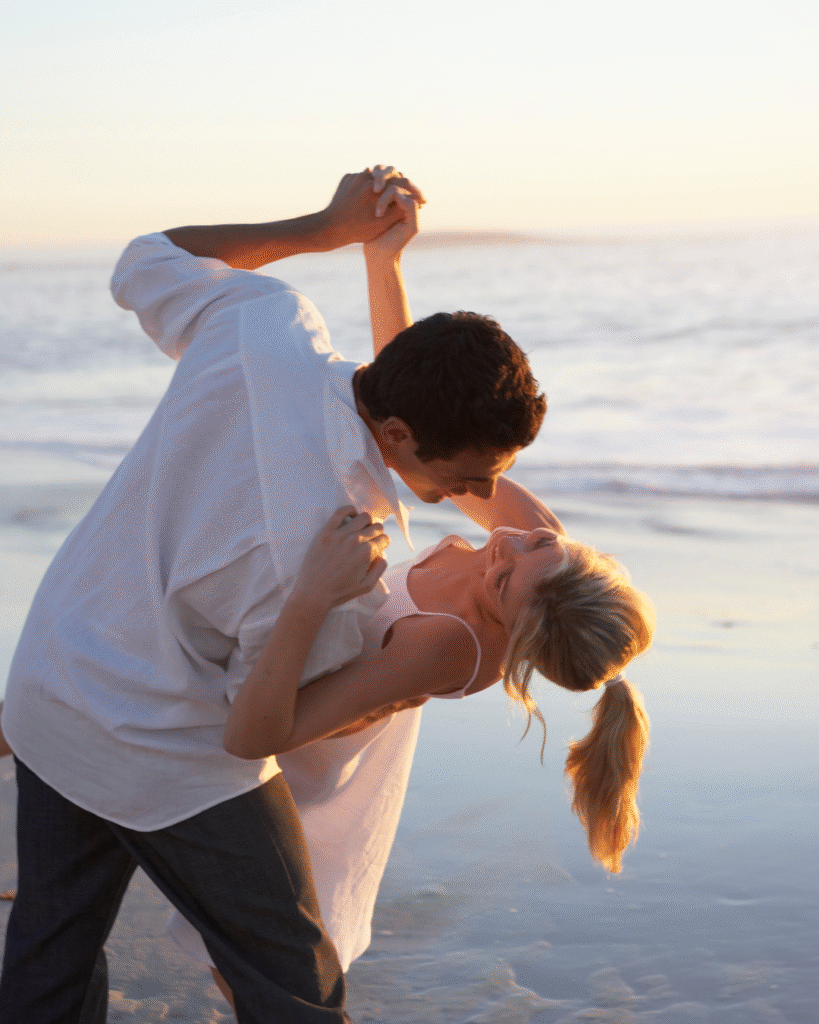
A New Year of Dancing: Setting Clear Goals You Can Actually Reach
A New Year often arrives with enthusiasm, but resolutions can fade without a plan. Ballroom and social dancing offer a refreshing alternative—goals that are specific, measurable, and enjoyable. Instead of vague promises, let’s map out targets that keep you moving forward with excitement and clarity.
Below are tangible dance goals with real examples of how a student might approach them, step by step.
Tango Dancers
Goal 1: Take Consistent Weekly Lessons
Consistency is the heartbeat of progress.
What this looks like in practice:
Book a weekly private lesson at the same time each week. Treat it like an appointment you would never cancel unless absolutely necessary.
Pair that lesson with a weekly group class to expose yourself to new figures, tempos, and partners.
Keep a small notebook or note in your phone to jot down the steps you covered each week.
At the end of each month, review your notes and identify one step or technique you want to improve the following month.
Students often ask, “What if I miss a week?” Simply reschedule within the same week. Momentum matters more than perfection.
Goal 2: Master One or Two Social Styles by Spring
Rather than dabbling in many styles, choose one or two to focus on for the next four months—Foxtrot, Rumba, or Swing, for example.
How to approach it:
Tell your instructor you want to achieve a certain level for that style by April.
Break it into chunks: understanding footwork, dancing to music, work on leading/following, and add some technique.
During lessons, start with quick reviews of figures learned previously to reinforce retention.
At home, practice footwork and timing without music first, then add music once you are confident.
Track which figures feel strong and which need attention.
This goal limits overwhelm and builds a feeling of mastery that fuels motivation.
Dancers Having Fun
Goal 3: Grow Comfortable Dancing in Public
Many students feel nervous dancing at a party for the first time. Exposure builds confidence, and practice parties are designed for this purpose.
A realistic plan:
Attend four social practice parties before the end of March.
At the first party, aim to dance only one song for each style you know—no pressure for perfection.
By the second party, try dancing with two different partners.
For the third party, choose one figure you struggled with that week and attempt it confidently.
After the fourth party, reflect on how your nerves and skills changed across the events.
Remember, everyone in the room is learning. A small risk now pays large confidence dividends later.
Goal 4: Improve Posture and Dance Frame
This foundational skill transforms balance, styling, and partnering. It is also measurable.
A step-by-step approach:
Learn the correct arm and shoulder placement with your instructor.
Practice holding your frame for one full song at home three times a week, focusing on lifting through the sternum and engaging your back muscles.
Film yourself on your phone once a week from the side to check alignment.
In lessons, ask for frame corrections early, before muscle memory locks in bad habits.
Set a benchmark: in six weeks, aim to hold your frame through an entire dance without collapsing or tensing your shoulders.
Students are often astonished by how improved frame elevates their dancing across all styles.
Goal 5: Strengthen Step Memory & Musical Timing
Better memory reduces frustration and boosts confidence. Timing anchors your movement to the music.
A helpful method:
After each lesson, write down the figures practiced, including the count and direction (e.g., “Rumba – Box Step: slow, quick, quick”).
At home, rehearse the sequence slowly without music while saying the counts aloud.
Once comfortable, add music at a manageable tempo.
Practice with a partner or instructor to test recall under pressure.
Track your progress by noting how quickly you can remember the steps each week.
With consistent practice, you will notice fewer “blanks” during a dance.
Goal 6: Prepare for a Show, Medal Test, or Competition
A performance goal gives structure and purpose to every lesson.
A concrete plan:
Choose an event scheduled for later in the year. Knowing the date focuses training.
With your instructor, select the dance style and music and outline a choreography timeline (e.g., complete the first minute of choreography by June).
Ask for clear weekly assignments between lessons—footwork to polish, body isolations to practice, or a musical phrase to master.
Schedule monthly video check-ins with yourself to measure improvement.
Plan costume fittings or music edits early to avoid crunch-time stress.
Working toward a performance clarifies expectations and ignites motivation.
Keeping Your New Dance Year on Track
Schedule lessons at the beginning of each month.
Set calendar reminders for practice times.
Celebrate progress: new figures, improved stamina, or smoother transitions.
Allow yourself patience—learning to dance is both athletic and artistic.
Dancing into a New Year offers structure, joy, and personal transformation. With thoughtful goals and supportive guidance, each lesson becomes a stepping stone toward confidence, mastery, and shared delight on the dance floor. Here’s to a year that moves with intention and a little sparkle.